The honest answer, right up front: living well with a big dog in a smaller home mostly comes down to one really good bed instead of several mediocre ones, a routine that burns energy outside the house, and gear that stores flat. The rest is detail.
If you share your square footage with a Lab or a Golden or a Shepherd, you already know the math. Seventy pounds of dog rearranges how every room in the house works, and half the advice online assumes you have a mudroom, a yard, and a spare bedroom to sacrifice. Most of us don’t.
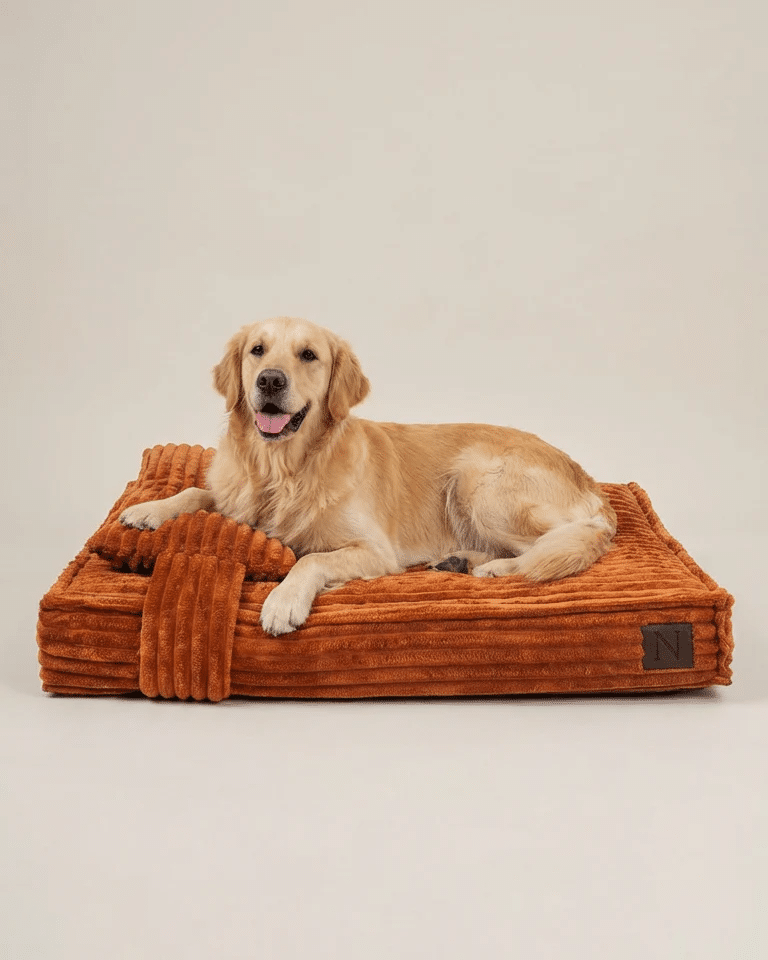
The bed is where I’d start, because with big dogs it quietly stops being a comfort purchase and becomes a health one. Large breeds are prone to hip and joint trouble as they age, and a thin bed that flattens under their weight means they’re more or less sleeping on the floor with extra steps. Before spending anything, read a detailed large-breed dog bed guide, because buying the wrong size twice costs more than buying right once. I know this from experience, unfortunately.
Why One Good Bed Beats Three Cheap Ones
Your dog is only going to truly use one spot anyway. Dogs pick a headquarters, usually with a view of wherever you spend your evenings, and the other beds turn into expensive floor decorations.
There’s also a space argument that took me too long to appreciate. One properly sized bed in the living room takes up less floor than three sad flat ones scattered around the house. Fewer, better things. It’s the whole philosophy of small-space living, and it applies to the dog too.
How Big Should the Bed Actually Be?
Bigger than you think. This is the classic mistake, buying a “large” bed for a large dog, then discovering your dog is what the sizing chart considers jumbo.
Measure your dog lying down, nose to base of tail, and add several inches on both ends. If your dog curls into a tight ball every single night, that’s not cozy, that’s a bed that’s too small. Dogs should be able to stretch completely flat.
| Dog weight | What usually fits | Common mistake |
|---|---|---|
| 50-70 lbs | Large bed | Buying medium because the room is small |
| 70-90 lbs | XL bed | Buying large and calling it close enough |
| 90+ lbs | XL/jumbo with real orthopedic foam | Any bed without proper foam support |
What Else Makes a Small House Work With a Big Dog?
A tired dog is a smaller dog. Not literally. But a big dog who got a real morning walk occupies a room differently than one who’s been inside all day, and the house honestly feels bigger when the dog is calm.
Go vertical with the dog stuff. Hooks for leashes, one bin for toys, and please, food in a proper container instead of a giant bag slumping in the kitchen corner. That bag alone was stealing a whole cabinet’s worth of visual space in my kitchen.
Washable everything. Whatever your dog touches regularly should zip off and survive a hot wash. Big dog, big hair. This one habit does more for how clean the house feels than any candle.
And teach “place.” Ten minutes a day until your dog reliably goes to their bed on cue. In a small house, being able to send seventy pounds of enthusiasm to a designated spot when the pizza guy rings is genuinely life-changing.
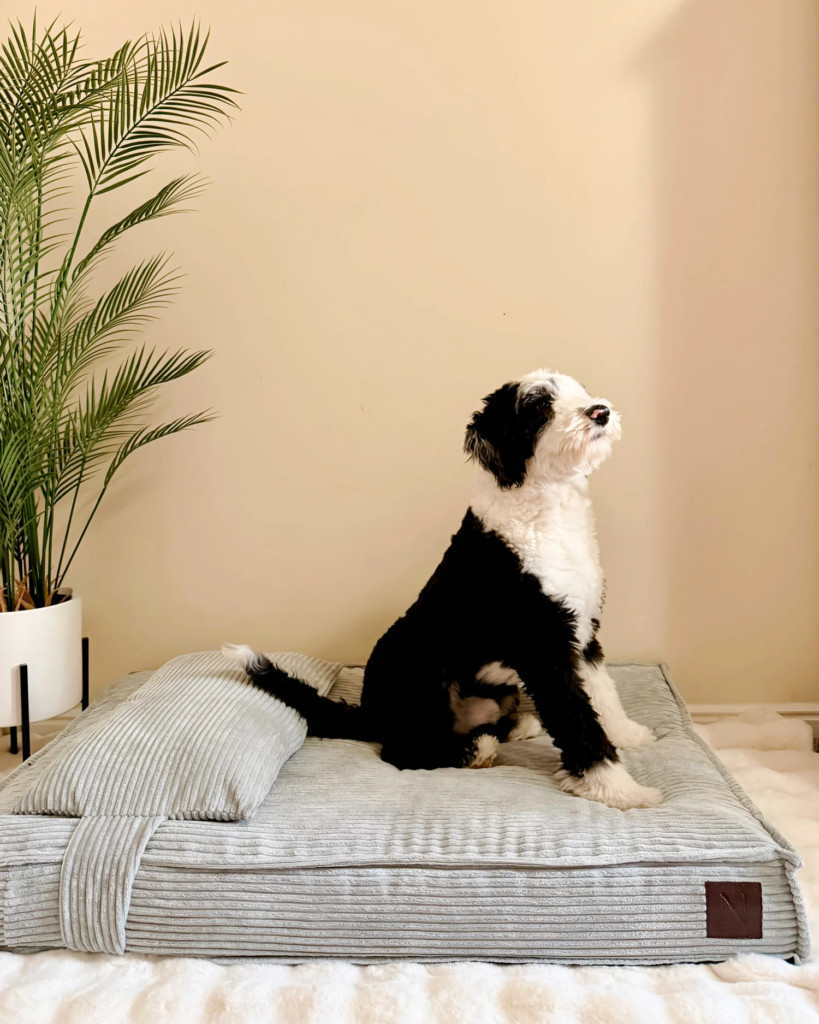
One more small-house trick that gets overlooked: think in zones, not rooms. Your dog doesn’t need a room, they need a sleeping zone, a feeding zone, and somewhere the muddy-paw chaos happens, ideally near the door. Once those three zones exist, even a small home stops feeling like the dog is everywhere at once. The feeding zone can be a corner of the kitchen with a tray under the bowls. The mud zone can be a single mat and a towel on a hook. Zones cost almost nothing, and they’re the difference between a house with a dog in it and a house that works with a dog in it.
Do Big Dogs Even Notice the Difference?
They tell you, in their own way. When the bed is right, the endless pre-sleep rotating settles down, they sleep in longer stretches, and older dogs get up in the morning with noticeably less creaking effort.
Watch where your dog chooses to sleep for a week. Picking the hard floor in summer usually means they run hot and want something more breathable. Climbing into the sofa cushions means they want more support than their current bed is giving them. Dogs vote with their bodies.
A big dog in a smallish house was never really the problem. It just asks you to be a little intentional, and the dog, for the record, thinks your house is exactly the right size.
Geometry Dash is a great game for people who do not mind a little frustration. You should try it because the satisfaction of finally completing a difficult level is worth the effort.
This is exactly the kind of practical advice I needed—thank you! The ‘one good bed’ philosophy finally clicked for me, and the zone approach is brilliant. I’ve been battling the scattered toy bin and the sagging food bag in the corner, and you’re right, it steals so much visual space. Also appreciate the honest chart on bed sizing—guilty of buying ‘close enough’ and wondering why my 80-lb shepherd still prefers the sofa. Going to try the place command with more consistency this week. Really helpful post!
S týmto by som trochu polemizoval, pri zahraničných stávkových kanceláriách pre českých hráčov nie sú kurzy jediným dôležitým faktorom. Pri konkrétnej voľbe by som si najprv skontroloval platobné možnosti, limity a podmienky výberu. Na ultimasnoticias.com.ve je napríklad spomenutá aj téma bettingu bez švédskej licencie, čo môže byť pri porovnávaní relevantný detail. Nakoniec je praktickejšie pozerať sa na celé podmienky účtu než na jednu výhodu.
Very informative post!
informative post!
I really liked your points
I really appreciate your post.
appreciate your post.
Lovely collection I appreciate that
The “one good bed beats three cheap ones” point really landed—I’ve watched big dogs ignore every extra bed and camp on the one that actually supports them. Measuring nose-to-tail before buying would have saved me a return. Zones instead of rooms is such a practical small-space frame; the place command tip alone is worth the read.
The part about one good bed instead of three cheap ones makes a lot of sense. We have a lab and he definitely picked one spot in the living room and ignores the other bed we bought. The tip about measuring nose to tail and adding a few inches is helpful too, I think we got the size wrong the first time. The zones idea is simple but I hadn’t thought about it that way before.