
It’s a new year and a new you- so let 2018 be all about making better choices, with Breyers delights as one of them. Breyers delights is all about freely enjoying a treat that’s better for you so that you can indulge without all the guilt. It is made with high-quality ingredients, naturally sourced flavors and all American dairy, it will leave your taste buds in disbelief that it’s 330 calories and 20 grams of protein per pint.

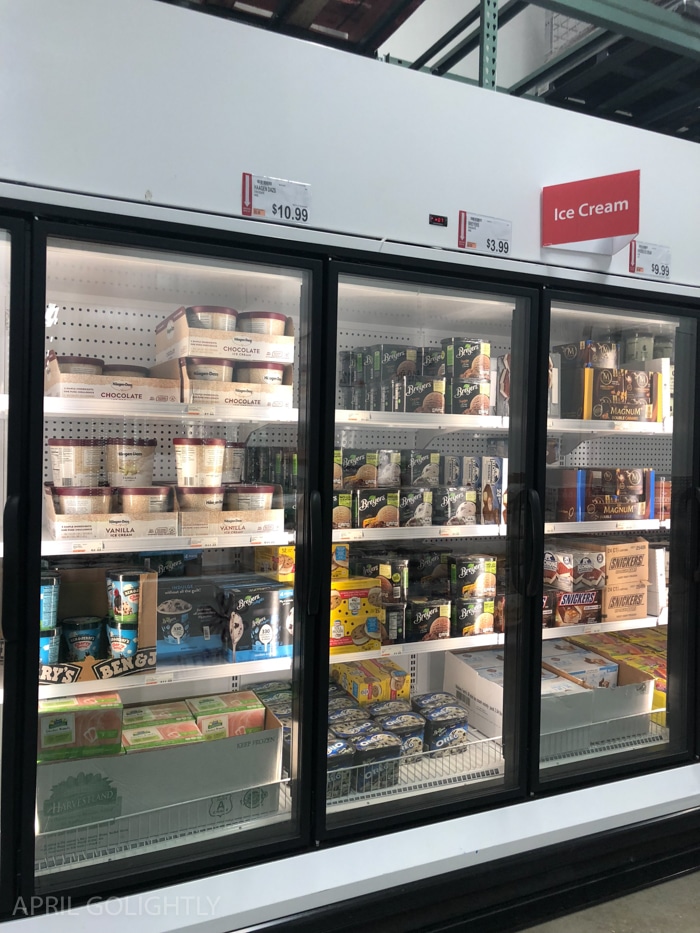
I found the Breyers delights Cookies and Cream at BJ’s. It’s truly tasty cookies and cream reduced-fat ice cream, made with real cookies and fresh cream in every bite. A wondrous combination that your taste buds will love at 330 calories per pint. And not only that, but at BJ’s you’ll get all the savings that your wallet will surely love too so that you can enjoy fresh choices, surprising finds and low prices. I love shopping at BJ’s so much. They have the best stuff at great prices.
Breyers delights lets you get a little sweet flavor into your day without having to splurge on calories. It’s only 260-330 calories and 20 grams of protein per pint!
These cookie and cream ice cream shakes are made with Breyers delights cookies and cream reduced-fat ice cream with added milk. You can easily make this 3 ingredient ice cream shake with either regular milk or almond milk to keep the calories down.


Cookies and Cream Ice Cream Shake
Ingredients
- 6 scoops Ice Cream Cookie and Cream
- 2/3 cup Milk
- 3 Cookies for toppings, 1 crushed and 1 for each milkshake
Instructions
- Place two glasses in the freezer for at least 10 minutes.
- Place the Breyers delights cookies and cream ice cream and milk in the blender. Blend until smooth.
- Pour the milkshake mixture into chilled glasses.
- Top with whipped cream, full-size cookies on each glass, and crushed cookies.
- Serve cold.
What a yummy recipe idea! So easy and delicious!
Its such as you read my thoughts! You appear to know a lot about this, like you wrote the ebook in it
or something. I believe that you can do with some % to
pressure the message home a little bit, however instead of that, that is great blog.
A great read. I will certainly be back.
I just like the valuable information you provide for your articles.
I will bookmark your blog and check again here regularly.
I am relatively certain I will learn lots of new stuff right right here!
Best of luck for the next!
MetaMask Download is a must for Web3. The interface is user-friendly, and it allows seamless access to decentralized applications.
There’s definately a lot to know about this topic. I really
like all the points you’ve made.
wonderful post, very informative. I wonder why the other experts of this sector do
not notice this. You must proceed your writing.
I’m confident, you’ve a huge readers’ base already!
I just could not leave your web site prior to suggesting
that I extremely loved the standard info a person supply in your visitors?
Is gonna be back incessantly in order to investigate cross-check new posts
Your attention to detail and commitment to accuracy is truly commendable. Fantastic job!
Hi Dear, are you actually visiting this web site on a regular basis, if so then you will absolutely take good
knowledge.
Unquestionably imagine that which you stated. Your favorite reason seemed to be on the
net the simplest factor to have in mind of. I say to you, I definitely get annoyed while folks think about worries that they plainly don’t know
about. You controlled to hit the nail upon the highest and outlined out the whole thing without having side-effects
, people could take a signal. Will probably be back to
get more. Thank you
Hello, Neat post. There’s an issue with your site in internet explorer,
would check this? IE still is the market leader and a good portion of other people will leave out your
fantastic writing due to this problem.
I really like your blog.. very nice colors & theme.
Did you make this website yourself or did you
hire someone to do it for you? Plz answer back as I’m looking to construct my own blog and would like
to find out where u got this from. kudos
Attractive section of content. I just stumbled upon your blog and
in accession capital to assert that I acquire
actually enjoyed account your blog posts. Anyway I will be subscribing to your feeds and even I achievement you access consistently
quickly.
What’s Going down i am new to this, I stumbled upon this I have discovered It
absolutely useful and it has aided me out loads.
I am hoping to give a contribution & help other customers like its helped me.
Good job.
真实的人类第二季高清完整版,海外华人可免费观看最新热播剧集。
Hi there it’s me, I am also visiting this web site regularly,
this site is genuinely good and the visitors are actually sharing nice thoughts.
Hello, I enjoy reading all of your article post. I wanted
to write a little comment to support you.
International friendly live scores, national team matches outside tournaments
I like the helpful information you provide to your articles.
I will bookmark your blog and take a look at once more right here regularly.
I’m fairly certain I will learn lots of new stuff
right here! Good luck for the following!
Greetings! Very helpful advice in this particular post!
It is the little changes that produce the most significant changes.
Many thanks for sharing!
I know this if off topic but I’m looking into starting my own weblog and was curious what
all is required to get setup? I’m assuming having a blog like yours would cost a pretty penny?
I’m not very internet smart so I’m not 100% certain. Any recommendations or advice would be greatly appreciated.
Kudos
My partner and I stumbled over here by a different page and thought I might check things out.
I like what I see so now i’m following you. Look forward to going over your web page yet again.
愛壹帆海外版,专为华人打造的高清视频官方认证平台,支持全球加速观看。
New online casino Australia 2025 – fresh sites with huge welcome bonuses
雨霖铃2026 杨洋章若楠 高清古装仙侠虐恋 海外华人高清无广告 AI内容匹配
Hello there I am so happy I found your webpage, I really found you by accident, while I
was researching on Aol for something else, Anyways I
am here now and would just like to say many thanks for
a fantastic post and a all round interesting blog (I also love the theme/design),
I don’t have time to read it all at the moment but I have bookmarked it
and also added in your RSS feeds, so when I have time I will be back to
read a great deal more, Please do keep up the great job.
Hi there I am so happy I found your webpage, I really
found you by accident, while I was researching on Askjeeve for something else, Anyhow I am here
now and would just like to say thanks a lot for a fantastic post and a all round thrilling blog (I also love the theme/design),
I don’t have time to go through it all at the minute but I
have bookmarked it and also included your RSS feeds, so when I have time I will
be back to read much more, Please do keep
up the excellent jo.
PG Soft 2026: quem tá lucrando mais com cashback diário ou giros grátis?
Mahjong Ways 2 manteve ritmo forte na faixa de aposta moderada.
Asking questions are genuinely pleasant thing if you are not understanding something fully, except
this article provides nice understanding yet.
社会の価値観が多様化する中で、リアルドールやラブドールに対する見方も大きく変化しています。
かつては偏見や誤解が多かったものの、現在では個人の選択肢や、穏やかに受け入れられるようになりました。
それでもなお、誤った情報や広まっているケースも多く、客観的な事実を知ることがとても重要です。
このサイトでは、先入観を捨てて、実際の利用状況に基づいた情報を分かりやすく解説しています。
利用する人の目的は人それぞれであり、癒しを求める方、表現を追求する方など実に多様です。
どんな使い方をするにしても、品質とマナーを守ることが大前提であり、この点をしっかりと解説しています。
わが国における法的な位置づけや、倫理的な考え方についても、専門的な見地からまとめています。
誤解を解くことで、より豊かで個人のライフスタイルを支えられる社会になることを願っています。
情報が不足しているがために、怖がったりする方にとって、安心できる材料になるはずです。
広く一般の方に知っていただき、偏らない見方が広がることを期待しています。
このコンテンツが、正しい知識を広めるきっかけになれば幸いです。
This is very interesting, You’re a very professional blogger.
I have joined your rss feed and look forward to seeking more
of your wonderful post. Additionally, I’ve shared your site in my social networks
Sweet blog! I found it while searching on Yahoo News. Do you have any tips on how to get listed in Yahoo News?
I’ve been trying for a while but I never seem to get there!
Many thanks
PSL fans from Pakistan, let’s connect! Insane!
For anyone reading this, pay attention to paragraph 4. That subtle distinction between “diversity” and “randomness” is what saves you during a Core Update.
Does this apply to non-English markets as well? We’re seeing conflicting signals in our EU campaigns compared to what you’ve described here. Would love to hear your thoughts on regional variance.
Does this apply to non-English markets as well? We’re seeing conflicting signals in our EU campaigns compared to what you’ve described here. Would love to hear your thoughts on regional variance.
I bookmarked this for my team. The section on avoiding footprints is crucial. We recently audited a site that got hit exactly because they ignored that principle. Good catch.
Great read. It reminds me of the strategy we deployed last quarter. The focus on foundational stability really pays off when the algorithm shifts. Thanks for compiling this.
Great read. It reminds me of the strategy we deployed last quarter. The focus on foundational stability really pays off when the algorithm shifts. Thanks for compiling this.
Thanks for the transparency. It’s refreshing to see a strategy that doesn’t rely on black-hat churn and burn. Sustainable growth is the only way forward.
The shift towards “entity-based” indexing is real. Your strategy seems to leverage that by building entity associations rather than just keyword matches. Smart.
Does this apply to non-English markets as well? We’re seeing conflicting signals in our EU campaigns compared to what you’ve described here. Would love to hear your thoughts on regional variance.
Spot on about the indexing delays. It’s not just about building the link anymore; it’s about the “stickiness” of the placement. We’ve been focusing heavily on that metric lately.
This complements the “Entropy” theory perfectly. If you don’t introduce randomness, you’re just painting a target on your back. Glad to see others advocating for smarter engineering.
This is the missing piece of the puzzle for us. We had the content and the technical SEO, but the off-page signal diversity was lacking. Thanks for the clarity.
Brilliant articulation of the problem. The industry has been too focused on metrics like DA/DR instead of actual traffic flow and user behavior.
I’ve been following this topic for a while, and your analysis on the structural shifts really adds a new perspective. We’ve noticed similar patterns in our internal data at SignalLayer, specifically regarding the volatility timeline.
Finally, someone said it. The old school “blast and pray” method is dead. Precision and camouflage are the new standard.
I’m sharing this with our content team. We’ve been struggling to explain why “quality over quantity” isn’t just a cliché, and this illustrates it perfectly.
The depth here is impressive. Most guides just skim the surface of link velocity, but your point about “natural variance” hits the nail on the head. It’s exactly what we preach to our clients.
Is there a specific tool you recommend for tracking the velocity? We’ve been doing it manually but it’s becoming unscalable.
Is there a specific tool you recommend for tracking the velocity? We’ve been doing it manually but it’s becoming unscalable.
Does this apply to non-English markets as well? We’re seeing conflicting signals in our EU campaigns compared to what you’ve described here. Would love to hear your thoughts on regional variance.
Brilliant articulation of the problem. The industry has been too focused on metrics like DA/DR instead of actual traffic flow and user behavior.
Spot on about the indexing delays. It’s not just about building the link anymore; it’s about the “stickiness” of the placement. We’ve been focusing heavily on that metric lately.
This aligns with the “Signal Noise” theory we’ve been developing. You need enough noise to mask the signal, but not so much that you lose authority. delicate balance.
This is a solid breakdown. One thing I’d add is that the impact of these updates often lags by 2-3 weeks. We tracked this across multiple projects and found the recovery phase is where most people give up too early.
I’m sharing this with our content team. We’ve been struggling to explain why “quality over quantity” isn’t just a cliché, and this illustrates it perfectly.
I’d love to see a follow-up post on how this integrates with social signals. We feel there’s a multiplier effect there that isn’t being fully utilized.
For anyone reading this, pay attention to paragraph 4. That subtle distinction between “diversity” and “randomness” is what saves you during a Core Update.
This is a solid breakdown. One thing I’d add is that the impact of these updates often lags by 2-3 weeks. We tracked this across multiple projects and found the recovery phase is where most people give up too early.
The depth here is impressive. Most guides just skim the surface of link velocity, but your point about “natural variance” hits the nail on the head. It’s exactly what we preach to our clients.
I’d argue that the content relevance is even more critical now. We’ve seen perfectly good links get devalued just because the semantic match wasn’t tight enough.
Thanks for the transparency. It’s refreshing to see a strategy that doesn’t rely on black-hat churn and burn. Sustainable growth is the only way forward.
Actually, I have to disagree slightly with the second point. In our testing, we found that over-optimization was less of a factor than pure engagement metrics. It’s interesting to see how different niches react differently.
I bookmarked this for my team. The section on avoiding footprints is crucial. We recently audited a site that got hit exactly because they ignored that principle. Good catch.
For anyone reading this, pay attention to paragraph 4. That subtle distinction between “diversity” and “randomness” is what saves you during a Core Update.
Great resource. I’ve sent this to a few colleagues who are still stuck in 2015-era SEO tactics. Hopefully, this wakes them up.
For anyone reading this, pay attention to paragraph 4. That subtle distinction between “diversity” and “randomness” is what saves you during a Core Update.
Is there a specific tool you recommend for tracking the velocity? We’ve been doing it manually but it’s becoming unscalable.
For anyone reading this, pay attention to paragraph 4. That subtle distinction between “diversity” and “randomness” is what saves you during a Core Update.
Thanks for the transparency. It’s refreshing to see a strategy that doesn’t rely on black-hat churn and burn. Sustainable growth is the only way forward.
Does this apply to non-English markets as well? We’re seeing conflicting signals in our EU campaigns compared to what you’ve described here. Would love to hear your thoughts on regional variance.
The shift towards “entity-based” indexing is real. Your strategy seems to leverage that by building entity associations rather than just keyword matches. Smart.
This is exactly why we moved away from automated PBNs. The risk/reward ratio just doesn’t make sense anymore compared to what you’re describing.
Actually, I have to disagree slightly with the second point. In our testing, we found that over-optimization was less of a factor than pure engagement metrics. It’s interesting to see how different niches react differently.
Question: Have you tested this approach with expired domains? We’re running some experiments now and the results are… mixed. Your methodology seems safer.
I’m curious about the sample size for these conclusions. We saw a 15% deviation in our own datasets, but the overall trend aligns with your findings. Good work.
Have you considered the impact of mobile-first indexing on these placements? We’ve noticed that some “desktop-safe” strategies are flagging on mobile crawls.
Spot on about the indexing delays. It’s not just about building the link anymore; it’s about the “stickiness” of the placement. We’ve been focusing heavily on that metric lately.
Spot on about the indexing delays. It’s not just about building the link anymore; it’s about the “stickiness” of the placement. We’ve been focusing heavily on that metric lately.
Finally, someone said it. The old school “blast and pray” method is dead. Precision and camouflage are the new standard.
I’ve been following this topic for a while, and your analysis on the structural shifts really adds a new perspective. We’ve noticed similar patterns in our internal data at SignalLayer, specifically regarding the volatility timeline.
The depth here is impressive. Most guides just skim the surface of link velocity, but your point about “natural variance” hits the nail on the head. It’s exactly what we preach to our clients.
I’d argue that the content relevance is even more critical now. We’ve seen perfectly good links get devalued just because the semantic match wasn’t tight enough.
I’d love to see a follow-up post on how this integrates with social signals. We feel there’s a multiplier effect there that isn’t being fully utilized.
This aligns with the “Signal Noise” theory we’ve been developing. You need enough noise to mask the signal, but not so much that you lose authority. delicate balance.
Is there a specific tool you recommend for tracking the velocity? We’ve been doing it manually but it’s becoming unscalable.
This is the missing piece of the puzzle for us. We had the content and the technical SEO, but the off-page signal diversity was lacking. Thanks for the clarity.
Brilliant articulation of the problem. The industry has been too focused on metrics like DA/DR instead of actual traffic flow and user behavior.
I’d argue that the content relevance is even more critical now. We’ve seen perfectly good links get devalued just because the semantic match wasn’t tight enough.
I’m curious about the sample size for these conclusions. We saw a 15% deviation in our own datasets, but the overall trend aligns with your findings. Good work.
Finally, someone said it. The old school “blast and pray” method is dead. Precision and camouflage are the new standard.
Have you considered the impact of mobile-first indexing on these placements? We’ve noticed that some “desktop-safe” strategies are flagging on mobile crawls.
Finally, someone said it. The old school “blast and pray” method is dead. Precision and camouflage are the new standard.
Question: Have you tested this approach with expired domains? We’re running some experiments now and the results are… mixed. Your methodology seems safer.
I’m skeptical about the timeline you proposed, but I’m willing to test it. If this holds up, it changes how we structure our entire outreach program.
This is the missing piece of the puzzle for us. We had the content and the technical SEO, but the off-page signal diversity was lacking. Thanks for the clarity.
This aligns with the “Signal Noise” theory we’ve been developing. You need enough noise to mask the signal, but not so much that you lose authority. delicate balance.
Great read. It reminds me of the strategy we deployed last quarter. The focus on foundational stability really pays off when the algorithm shifts. Thanks for compiling this.
I’d love to see a follow-up post on how this integrates with social signals. We feel there’s a multiplier effect there that isn’t being fully utilized.
I’m sharing this with our content team. We’ve been struggling to explain why “quality over quantity” isn’t just a cliché, and this illustrates it perfectly.
Great read. It reminds me of the strategy we deployed last quarter. The focus on foundational stability really pays off when the algorithm shifts. Thanks for compiling this.
I’m sharing this with our content team. We’ve been struggling to explain why “quality over quantity” isn’t just a cliché, and this illustrates it perfectly.
I’m curious about the sample size for these conclusions. We saw a 15% deviation in our own datasets, but the overall trend aligns with your findings. Good work.
This is a solid breakdown. One thing I’d add is that the impact of these updates often lags by 2-3 weeks. We tracked this across multiple projects and found the recovery phase is where most people give up too early.
Have you considered the impact of mobile-first indexing on these placements? We’ve noticed that some “desktop-safe” strategies are flagging on mobile crawls.
Is there a specific tool you recommend for tracking the velocity? We’ve been doing it manually but it’s becoming unscalable.
Actually, I have to disagree slightly with the second point. In our testing, we found that over-optimization was less of a factor than pure engagement metrics. It’s interesting to see how different niches react differently.
This is the missing piece of the puzzle for us. We had the content and the technical SEO, but the off-page signal diversity was lacking. Thanks for the clarity.
Is there a specific tool you recommend for tracking the velocity? We’ve been doing it manually but it’s becoming unscalable.
This is a solid breakdown. One thing I’d add is that the impact of these updates often lags by 2-3 weeks. We tracked this across multiple projects and found the recovery phase is where most people give up too early.
The analogy of the “immune system” is perfect. You need to build resistance before the virus (update) hits. Too many people react instead of prepare.
I’d love to see a follow-up post on how this integrates with social signals. We feel there’s a multiplier effect there that isn’t being fully utilized.
The analogy of the “immune system” is perfect. You need to build resistance before the virus (update) hits. Too many people react instead of prepare.
Brilliant articulation of the problem. The industry has been too focused on metrics like DA/DR instead of actual traffic flow and user behavior.
The analogy of the “immune system” is perfect. You need to build resistance before the virus (update) hits. Too many people react instead of prepare.
The shift towards “entity-based” indexing is real. Your strategy seems to leverage that by building entity associations rather than just keyword matches. Smart.
I’m skeptical about the timeline you proposed, but I’m willing to test it. If this holds up, it changes how we structure our entire outreach program.
Brilliant articulation of the problem. The industry has been too focused on metrics like DA/DR instead of actual traffic flow and user behavior.
I’m curious about the sample size for these conclusions. We saw a 15% deviation in our own datasets, but the overall trend aligns with your findings. Good work.
Great read. It reminds me of the strategy we deployed last quarter. The focus on foundational stability really pays off when the algorithm shifts. Thanks for compiling this.
This is exactly why we moved away from automated PBNs. The risk/reward ratio just doesn’t make sense anymore compared to what you’re describing.
I bookmarked this for my team. The section on avoiding footprints is crucial. We recently audited a site that got hit exactly because they ignored that principle. Good catch.
For anyone reading this, pay attention to paragraph 4. That subtle distinction between “diversity” and “randomness” is what saves you during a Core Update.
The analogy of the “immune system” is perfect. You need to build resistance before the virus (update) hits. Too many people react instead of prepare.
Just wanted to say thanks for the detailed case study. It’s rare to see actual data backing up these claims. We’ll be adjusting our Q4 roadmap based on some of these insights.
Is there a specific tool you recommend for tracking the velocity? We’ve been doing it manually but it’s becoming unscalable.
This is the missing piece of the puzzle for us. We had the content and the technical SEO, but the off-page signal diversity was lacking. Thanks for the clarity.
Spot on about the indexing delays. It’s not just about building the link anymore; it’s about the “stickiness” of the placement. We’ve been focusing heavily on that metric lately.
Is there a specific tool you recommend for tracking the velocity? We’ve been doing it manually but it’s becoming unscalable.
This is exactly why we moved away from automated PBNs. The risk/reward ratio just doesn’t make sense anymore compared to what you’re describing.
I’ve been following this topic for a while, and your analysis on the structural shifts really adds a new perspective. We’ve noticed similar patterns in our internal data at SignalLayer, specifically regarding the volatility timeline.
Wow, this cookies and cream ice cream looks absolutely heavenly! The texture looks so rich and creamy. As the manager of a Roblox gaming database and wiki site, I actually landed on your beautiful blog from a rather unique angle—I’ve been researching classic dessert recipes for our community guides. We are currently indexing the latest update logs and crafting recipes for a few popular restaurant tycoons and cooking simulators on the platform. I love adding real-world fun facts and authentic ingredient breakdowns to our game item wikis so younger players can see the inspiration behind their virtual kitchens. Your step-by-step guide is the perfect reference! Thank you for sharing such a delicious recipe!
Wow, this cookies and cream ice cream looks absolutely heavenly
I’ve tried substituting almond milk for regular milk before, and it still comes out perfectly creamy while keeping the calories even lower. Thanks for sharing such a simple and delicious recipe – a must-have for summer!
It‘s amazing that you can make such a great milkshake at home with just three ingredients.
I love that Breyers delights has a cookies and cream shake with 330 calories and 20g protein. Perfect for a new year treat without the guilt.
very usefule,thanks share
very usefule,thanks share
This Cookies and Cream milkshake looks absolutely irresistible